
It was just one of those weeks, folks. What promised to be a light schedule quickly turned into a series of first world problems. Instead of complaining, I’ll look for God’s sovereign purposes so I can turn chaos into a Christ-centered contemplation.
The only thing I find in common with a flooded basement, a “frost-free” refrigerator that won’t defrost, and a dead dishwasher is water. It’s either in the wrong place at the wrong time, or it’s not there at all. The timely and reliable control of water plays a huge role in our lives, whether in modern or ancient times.
Scripture references water frequently. Maiym, the Hebrew transliteration for “water”, appears 525x in the Old Testament; likewise, hydor (Greek) appears 70x. It’s featured in the creation of the earth (Gen. 1:9), acted as the main mechanism of God’s judgment in Noah’s day (Gen. ch.6-7), and supplied cities with its life-supporting function (2Ki. 20:20). It was miraculously given to the Israelites (Ex. 17:1), Samson (Ju. 15:19), and Jehoshaphat’s army (2Ki. 3:16-20). The Lord controls when and where it rains (Amos 4:7). Moses and Joshua divided it. Jesus and Peter walked on it.
Somehow these all point to spiritual realities. Isaiah refers to the water of affliction. Other metaphors include the water of salvation and the water of life. When we consider how God saves sinners, by directing His Word in due season to one of His elect, we perceive that God is the ultimate Water Manager, both physically and spiritually.
Believers are exhorted to draw near with a true heart in full assurance of faith, having our hearts sprinkled from an evil conscience, and our bodies washed with pure water. Our Lord Jesus shall sanctify and cleanse His church with the washing of water by the word. God’s promise through the prophet Ezekiel is that He will sprinkle clean water upon you, and ye shall be clean from all your filthiness, and from all your idols. No deed is so great that God’s water of salvation can’t cleanse. After listing many horrible sins, the Apostle Paul writes such were some of you: but ye are washed, but ye are sanctified, but ye are justified in the name of the Lord Jesus, and by the Spirit of our God. This surely is that fountain opened to the house of David and to the inhabitants of Jerusalem for sin and for uncleanness. Jesus boldly declared, except a man be born of water and of the Spirit, he cannot enter into the kingdom of God.
When the Lord chooses to afflict sinners, He sometimes withholds the rain. Elijah told Ahab as the Lord God of Israel liveth, before whom I stand, there shall not be dew nor rain these years, but according to my word. Hosea pleaded for Israel and Judah to repent, lest God make her as a wilderness, and set her like a dry land, and slay her with thirst. He also may create a famine in the land, not a famine of bread, nor a thirst for water, but of hearing the words of the Lord.
Why does God weary men with spiritual drought? Simply put, to alert them to their deepest need. Jesus said blessed are they which do hunger and thirst after righteousness: for they shall be filled. It seems He sifts for true saints like David: As the hart panteth after the water brooks, so panteth my soul after thee, O God. My soul thirsteth for God, for the living God: when shall I come and appear before God? Even today, Jesus still cries out, If any man thirst, let him come unto me, and drink. He that believeth on me, as the scripture hath said, out of his belly shall flow rivers of living water. In mercy, He will pour water upon him that is thirsty, and floods upon the dry ground: I will pour my spirit upon thy seed, and my blessing upon thine offspring: and they shall spring up as among the grass, as willows by the water courses. The Lord shall guide thee continually, and satisfy thy soul in drought, and make fat thy bones: and thou shalt be like a watered garden, and like a spring of water, whose waters fail not. But am I truly thirsty?
Faithful men use God’s word to their benefit, while those who are ungodly seem to like spiritual famines: for the earth which drinketh in the rain … bringeth forth herbs and receiveth blessing from God: but that which beareth thorns and briers is rejected, and is nigh unto cursing; whose end is to be burned. Jeremiah says cursed be the man that trusteth in man, and maketh flesh his arm, and whose heart departeth from the Lord. For he shall be like the heath in the desert, and shall not see when good cometh; but shall inhabit the parched places in the wilderness. Jeremiah goes on to compare the man who truly trusts God to a tree planted by the waters, and that spreadeth out her roots by the river, and shall not see when heat cometh, but her leaf shall be green; and shall not be careful in the year of drought, neither shall cease from yielding fruit. May we be mindful to regularly direct God’s water to our souls; then these other things won’t matter as much.
Like this? Consider sharing it to Facebook by clicking the linked icon below.
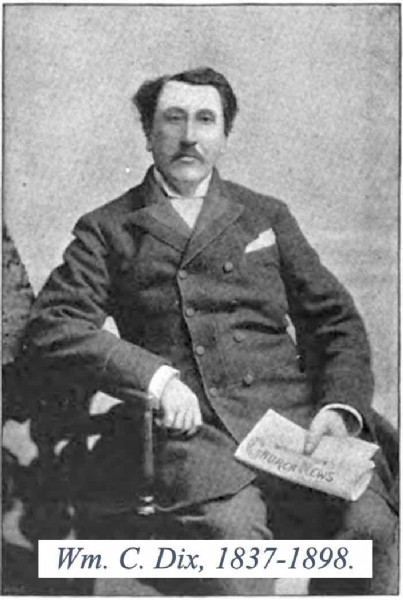 Though his job weathered life’s storms, his health did not. At age 29 he was hit with a near fatal illness and confined to bed for months. Severe depression sunk into his soul as a spiritual crisis washed over him. After earnestly spending his time in prayer and reading the Word of God, William rose from the depths of despair. While still a manager at the insurance company, he devoted his spare time to writing Christian-themed poetry.
 Buried Treasures.
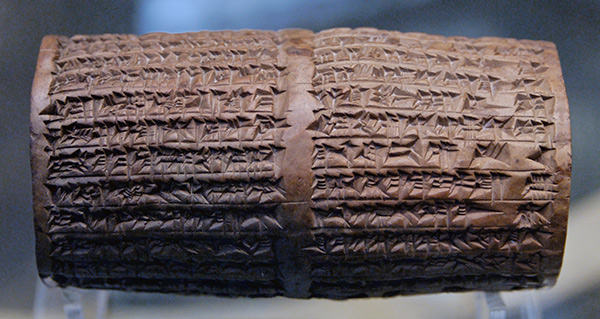
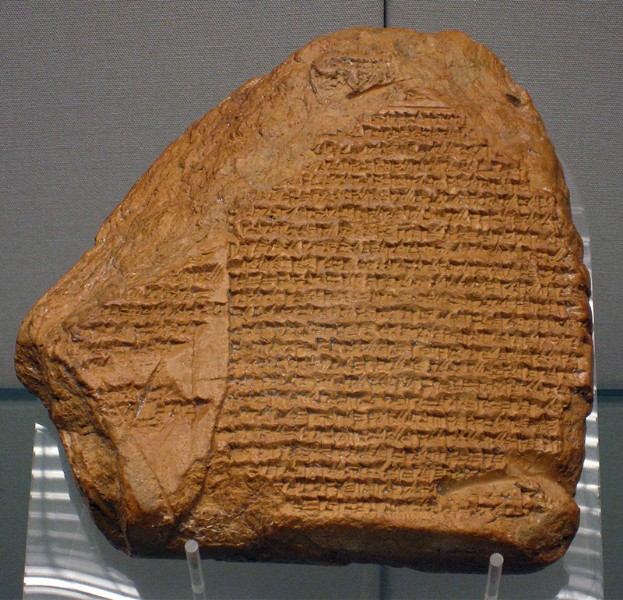 Then, in 1882, a translation of another ancient cuneiform text, the Nabonidus Chronicle (photo, left), revealed Nabonidus as an absentee king, spending 10 years of his 17-year reign living in Tema, Arabia (450 miles away from Babylon). The king left Belshazzar, whom the text calls
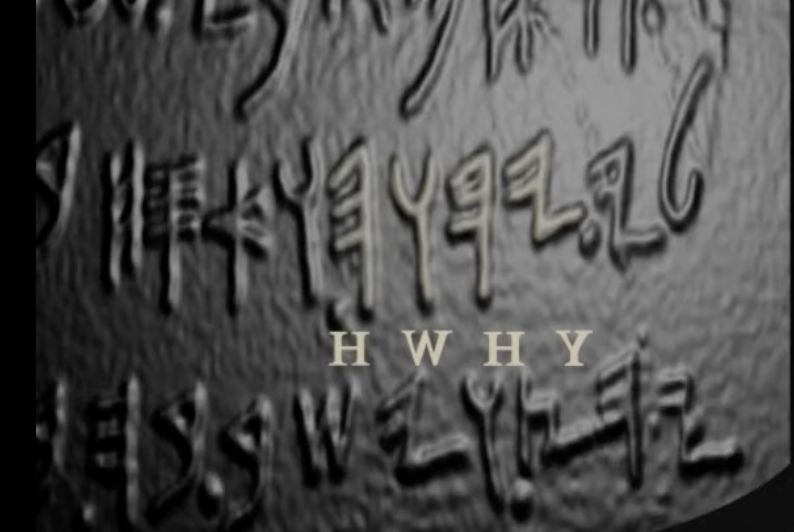
 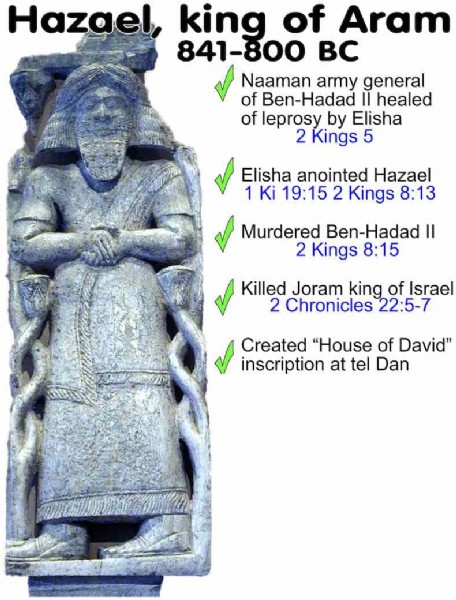 Epigrapher Christopher Rollston writes in Bible Odyssey: “Unfortunately, the recovered fragments do not preserve the names of the specific kings involved in this brutal encounter. However, based on the historical content of this inscription, plus Meso-potamian and biblical sources, the most convincing con-clusion is that the king of Damascus (Syria) known as Hazael (see annotated photo art, right) commissioned it in the ninth century B.C., after he usurped the throne of Damascus from Ben Hadad (2Ki 8:7,15). Hazael subsequently formed an alliance (1Ki 19:17, 2Ki 9:14) with king Jehu of Israel (reigned 843–815 B.C.E.), who was also a usurper. Therefore, it comes as no surprise that the Bible (2Ki 9) states Jehu of Israel slew both king Jehoram of Israel (849–843 B.C.E.) and king Ahaziah of Judah (843 B.C.E.), whereas the Tel Dan Inscription attributes these royal assassinations to Hazael. That is, these two usurpers were working together and so both could legitimately claim to have been responsible for the coup d’etat.”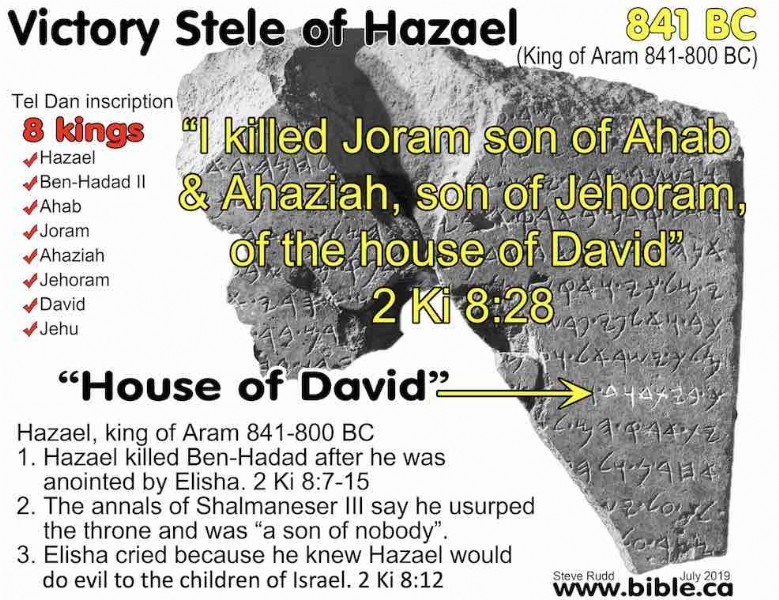
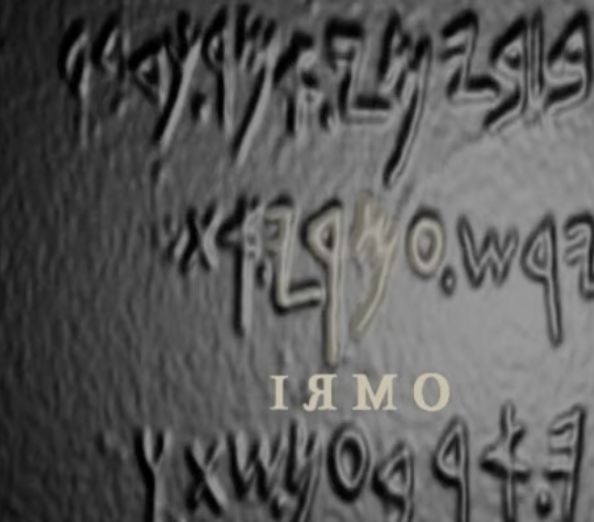
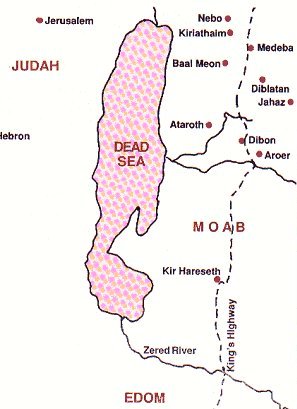 Enter F.A. Klein, an Anglican missionary living in Jerusalem. In 1868, he traveled near Dhiban (old Dibon) in west central Jordan where Moab was once located, helping the medical needs of a Bedouin tribe (see map, right). He traced down their rumors of a large stone with ancient writing and found an engraved basalt monument, 45”x26”x14” in size. The French obtained it, then stored in the Louvre (see photo, below) where it dated to around 830 BC. By 1994, the renowned French epigrapher Andre Lemaire deciphered its 34 lines of proto-Hebrew letters.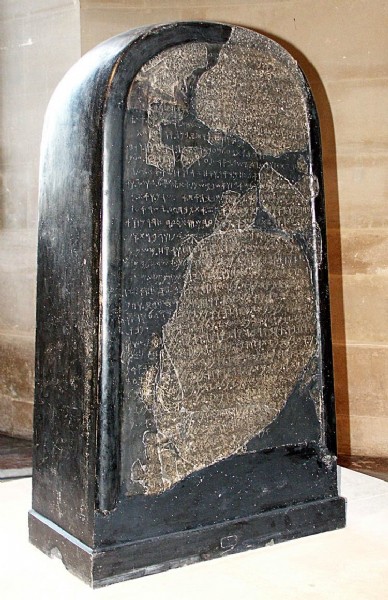
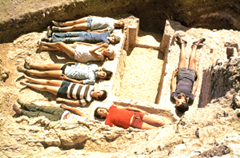 got bored, and took out his hammer. That’s when he broke open the door to a sizable burial chamber full of ancient artifacts hidden from the millennia of tomb raiders (see picture, right). And that’s when Barkay made the discovery of his career: the oldest known Hebrew inscriptions of The Old Testament (OT), dating to the days of Jeremiah.
 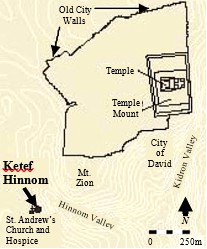 Threatening the boys with severe punishment if they failed to keep the site a secret (see map, left), Barkay feverishly drove them to remove and sort over 1,000 objects: gold, silver, and precious stones; as well as iron arrowheads, ivory, glass, and skeletons. All of them dated to the late 7th to early 6th century BC, a truly amazing discovery. Yet it was two 1-inch-long silver scrolls, the size of a cigarette butt, which put a foul taste in the critics’ mouths.
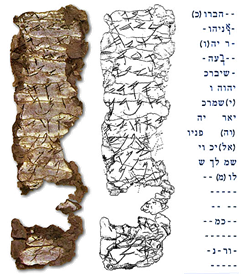 Scroll #1 reads:


