
Missives

A collection of apologetic and encouraging notes for Christians in need of some power-boosts from time to time.

Two years ago, archaeologist Eilat Mazar was working near the Temple Mount in Jerusalem, sifting for finds in an area called the Ophel which dates to the time of Israel's monarchy in the 8th century BC.  She discovered two amazing bullae – baked clay impressions used to officially seal the owner's written communication. 

Isaiah's Bulla

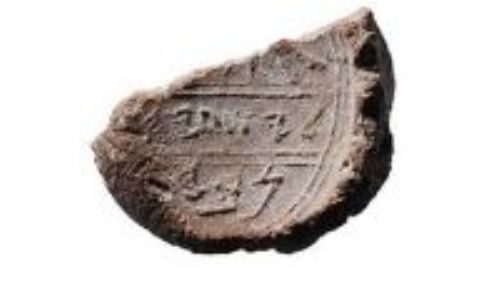
Two years ago, archaeologist Eilat Mazar was working near the Temple Mount in Jerusalem, sifting for finds in an area called the Ophel which dates to the time of Israel's monarchy in the 8th century BC.  She discovered two amazing bullae – baked clay impressions used to officially seal the owner's written communication.  One bulla reads "Belonging to Hezekiah (son of) Ahaz, king of Judah" [1].  Most archeological scholars don't doubt this belongs to the biblical King Hezekiah.


It's the second bulla that's caused quite the stir; for in the same layer merely a few feet away, the other seal reads "Belonging to Isaiah the prophet"!  Here's where the debate begins – the impression is partially damaged, and the last letter of the word "prophet" is missing.  Apparently, that's enough for these pottery scientists to throw on the brakes lest a divine foot come into the door of their beloved profession.  They declare, "we cannot say with absolute certainty this seal impression is Isaiah's."


Make no mistake - we can be certain that (i) the seal is authentic, having been discovered under a controlled excavation in a likely area with similar finds all dating to the same era; (ii) the impression was in fact Isaiah's; and (iii) it was discovered in an administrative area of Jerusalem in an area belong to one of the king's two palaces. [2] Biblically speaking, we know that Isaiah and Hezekiah were often spoken of together throughout scripture (2 Kings chapters 19-20, Isaiah chapters 37-39). 


Why would historical archaeologists not fully embrace this find?  While the bulla is not divinely inspired, yet it bears record to a divinely called prophet, whose name is placed in God's Word through inspiration.  Even that tiny bit of light – the phrase, Isaiah the prophet – makes them shudder.  This is the condemnation, that light is come into the world, and men loved darkness rather than light, because their deeds were evil. For every one that doeth evil hateth the light, neither cometh to the light, lest his deeds should be reproved.
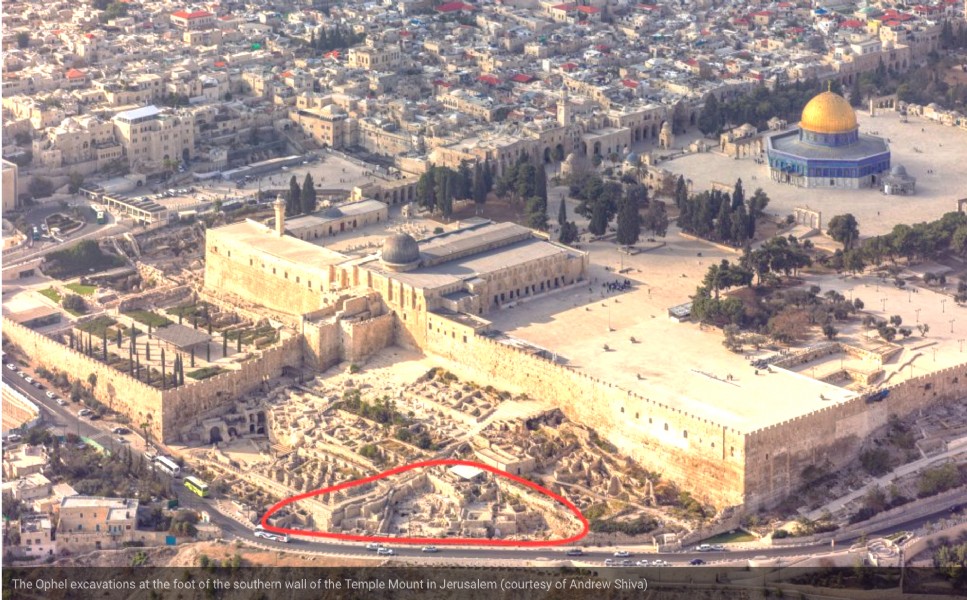
 

The Ophel excavation at the foot of the southern wall of the Temple Mount in Jerusalem. [3]
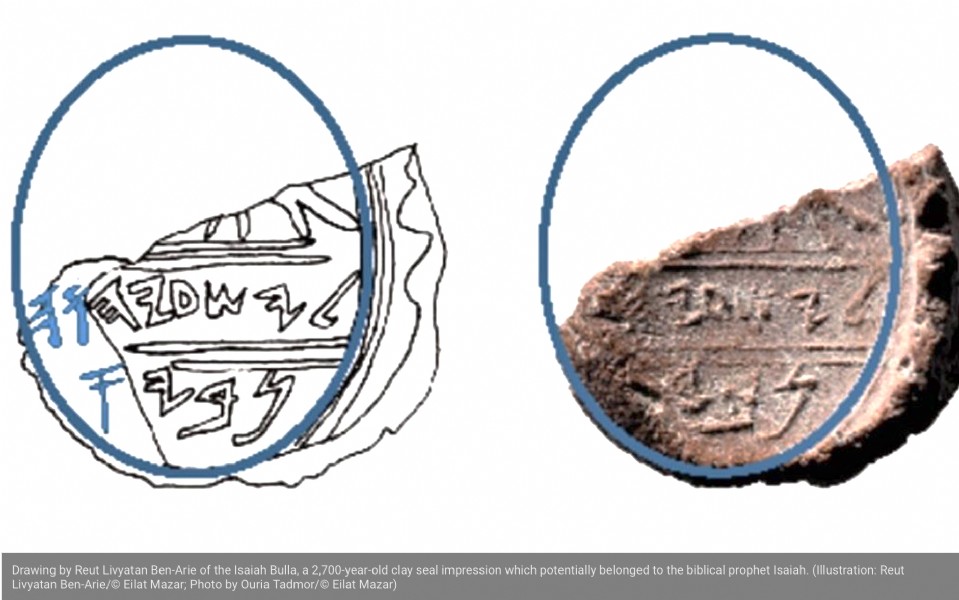
Drawing deciphering the Isaiah Bulla, a 2,700-year-old clay seal impression. [4]

Though we walk by faith and not by sight, Christians ought to expect to find evidence of God's historical presence.


[1] R. Ngo, "King Hezekiah in the Bible: Royal Seal of King Hezekiah Comes to Light," Bible History Daily (BAS blog), December 3, 2015.

[2] J. Daniel Hays, A Christian's Guide To Evidence For The Bible, Baker Books, Grand Rapids MI, 2020, pg. 48.

[3] Source: https://www.timesofisrael.com/in-find-of-biblical-proportions-proof-of-prophet-isaiah-believed-unearthed/

[4] Ibid.


Like this? Consider sharing it to Facebook by clicking the linked icon below.

Jesus Christ is King over the entire world – as sovereign Judge, yes; as a Redeemer, no.

About The Kingdom

Jesus Christ is King over the entire world – as sovereign Judge, yes; as a Redeemer, no.  No one is a citizen of Jesus' kingdom by virtue of his humanity.  With vested interest let us examine and consider the nature of the kingdom of God, also known as the kingdom of Heaven. (These are not two separate kingdoms, as the dispensationalists teach, but these interchangeable terms refer to two aspects of the kingdom, as will be evident below; it is God's kingdom, and it is heavenly.)


At Jesus' hastily arranged meeting with Pontius Pilate, The Savior and Pontius' boss told him My kingdom is not of this world, not of this world's means, methods, or devices; not mob ruled but God ruled; not as men pleasers, nor after the flesh but after the spirit. Furthermore, He told Nicodemus that except a man be born again, he cannot see the kingdom of God.  One's very ability to even detect or observe the kingdom of God requires the new birth, ending all hope of the wicked desiring to prosecute God on His turf, or the Jehovah Witnesses earthly paradise based on their false gospel, or even of those who profess Him as Lord, Lord.  To His elect, Jesus says it is given unto you to know the mysteries of the kingdom of heaven, but to them — the Pilates, Herods, false professors, and all the unrighteous — it is not given.


This kingdom is entered through much tribulation. Its citizens are poor in spirit, even persecuted for righteousness sake, yet are rich in faith.  This God of heaven shall set up a kingdom, which shall never be destroyed ... but it shall break in pieces and consume all these kingdoms and it shall stand forever.  The kingdom of God comes with power, and is not meat and drink, but righteousness, and peace, and joy in the Holy Ghost.


Perhaps you are sensing this is a very different kingdom, and in this case, your senses do not lie to you.  In a single setting Jesus told His audience that this kingdom can be compared to a man which sowed good seed in his field, a grain of mustard seed, leaven, treasure hid in a field, a merchant man seeking goodly pearls, and a net.  This kingdom has keys, and Jesus freely gives them to His children. Speaking of children, Jesus said except ye be converted, and become as little children, ye shall not enter into the kingdom of heaven.


Jesus also disclosed unusual insights about this kingdom. He preached that the kingdom of God was at hand, requiring repentance for entry.  He told the chief priests and elders that harlots and publicans entered the kingdom of God before them because the latter repented, while they did not. Worse yet for them, He declared the kingdom of God shall be taken from you, and given to a nation bringing forth the fruits thereof.  Jesus went to a shocking extreme, warning that if thine eye offend thee, pluck it out: it is better for thee to enter into the kingdom of God with one eye, than having two eyes to be cast into hell fire.  He skewered all godless magnates with a harsh proclamation, saying, How hard is it for them that trust in riches to enter into the kingdom of God, noting that camels could enter through a needle's eye with greater ease. Given America's great wealth, this should send a chill through our entire land. For true religion is the love of God, rather than the world; the love of Jesus and His cause, more than gold.


The bottom line is that the kingdom of God cometh not with observation, but the kingdom of God is within you.  It is a spiritual kingdom, silently working in men's hearts, to conform them to the image of Christ. When He comes, this kingdom shall be revealed in its full glory, as when a grain of corn becomes the towering stalk. It is in progress even now.  It is a kingdom when at the end, He shall have delivered up the kingdom to God, even the Father; when He shall have put down all rule and all authority and power.  Press on dear Christian, and endure all hardships, for we are inheriting a perfect, righteous kingdom which has no end.


Wherefore we receiving a kingdom which cannot be moved, let us have grace, whereby we may serve God acceptably with reverence and godly fear.  For so an entrance shall be ministered unto you abundantly into the everlasting kingdom of our Lord and Saviour Jesus Christ.


And the seventh angel sounded; and there were great voices in heaven, saying, The kingdoms of this world are become the kingdoms of our Lord, and of his Christ; and He shall reign for ever and ever.


Like this? Consider sharing it to Facebook by clicking the linked icon below.
Unto Him that loved us, and washed us from our sins in his own blood, and hath made us kings and priests unto God and His Father; to Him be glory and dominion for ever and ever. Amen. (Rev. 1:5b-6)

Saints As Kings

Unto Him that loved us, and washed us from our sins in his own blood, and hath made us kings and priests unto God and His Father; to Him be glory and dominion for ever and ever. Amen. (Rev. 1:5b-6)


Just focus on the first part of that verse: He hath made us kings. Revelation 5:10 adds, and we shall reign on the earth. How can that be? To the servant whose pound hath gained 10 pounds, Jesus said Well, thou good servant: because thou hast been faithful in a very little, have thou authority over ten cities.  What does this look like now, or in eternity, where they shall reign for ever and ever?


Apprehend, yes; comprehend, scarcely.  Physically this must be in the new earth, not only because scriptures teach of such a realm, but because we see the righteous in great disfavor among our worldly counterparts in the past and present. I know not of any society – even as religious as the Jews – who with great and unanimous accord held up an average sinner saved by grace and said, be thou our ruler. Yet our God has done (past tense, not 'will do') this for you, His elect.


We struggle not with His divine prerogative so to do, nor question the wisdom of His choice. We cry out as young Solomon, who said "And now, O LORD my God, thou hast made thy servant king ... and I am but a little child: I know not how to go out or come in. And thy servant is in the midst of thy people which thou hast chosen, a great people, that cannot be numbered nor counted for multitude. Give therefore thy servant an understanding heart to judge thy people, that I may discern between good and bad: for who is able to judge this thy so great a people?"


Should we like Solomon seek wisdom for this role? For those who live on the East Coast, in the capital region, the national news is the local news, and much of it is bad news. Perhaps one right response is to learn from all of the failed efforts we see around us, knowing we should not repeat such later. But wait, will we have any memory of this? Isaiah says behold, I create new heavens and a new earth: and the former shall not be remembered, nor come into mind.  How then are we to prepare?

And over whom shall we rule? We will be surrounded by His elect, all of whom are kings. Shall there be procreation, and we rule over each his own family?  Jesus said they which shall be accounted worthy to obtain that world, and the resurrection from the dead, neither marry, nor are given in marriage: neither can they die any more: for they are equal unto the angels; and are the children of God, being the children of the resurrection.  There isn't marriage in the afterlife, for we shall be like unto angels.  Alas, the earthly shadows of this life are too dim to cast any insightful light through the pearly gates of heaven.


Those espousing the critical text point to their corrupt Alexandrian manuscript, where Rev. 1:6 reads, "and hath made us a kingdom of priests."  Yes, it ties nicely to Exod. 19:6, which says as much, but comparing scripture to a corrupt manuscript is poor exegesis.  Paul says if ye be Christ's, then are ye Abraham's seed, and heirs according to the promise; to whom God promised that kings shall come out of thee.  Concerning our present spiritual reign, in 1809 Dr. John Gill wrote these excellent insights in his commentary:


"... the words are used in a higher and greater sense. The saints are made 'kings' by Christ; they are so now; they have received a kingdom of grace, which cannot be taken away; and they have the power of kings over sin, Satan, and the world, and all their enemies; and they live and fare like kings, and are clothed like them, in rich apparel, the righteousness of Christ; and are attended as kings, angels being their lifeguards; and they will appear much more so hereafter, when they shall reign on earth with Christ [and] shall sit upon the same throne, and have a crown of life and righteousness given them, and at last be introduced into the kingdom of glory. And they become such by being the sons of God, which power and privilege they receive from Christ, and so are heirs of God, and joint heirs with Him, and by being united to Him. And He also makes them 'priests' to offer up the spiritual sacrifices of prayer and praise, and those of a broken heart, and of a contrite spirit, and even their souls and bodies, as a holy, living, and acceptable sacrifice unto God, by anointing and sanctifying them by His Spirit: and they are made such by Him."


Do you have any thoughts on this subject? Share your ideas or any scripture with admin@mission-bible.net.


Like this? Consider sharing it to Facebook by clicking the linked icon below.

I was glad. Such are the feelings of the hearts of the righteous who gather for worship. The wicked who have not God are given over to their sinful ways. Not so for the people of God.

Glad Gatherings

I was glad when they said unto me, Let us go into the house of the LordOur feet shall stand within thy gates, O Jerusalem. Jerusalem is builded as a city that is compact together: whither the tribes go up, the tribes of the Lord, unto the testimony of Israel, to give thanks unto the name of the Lord. (Psalm 122:1-4)


I was glad. Such are the feelings of the hearts of the righteous who gather for worship. The wicked who have not God are given over to their sinful ways. Not so for the people of God. They know where they can find rest and relief, that which uplifts and encourages. It is in the fellowship of God's people, for there they find the Spirit of God in the midst whose power to heal the soul reaches even the mind and body.


Even the medical community recognizes this phenomenon. The Irish Longitudinal Study on Ageing, conducted by Trinity College Dublin from 2009-2016, followed 6,000+ religious Irish adults over the age of 50 for a decade. Their findings are statistically significant: those attending worship services regularly had far fewer depressive symptoms than those who did not. Social connectiveness appears to be a predictor of mental health.  Women in particular are directly affected.  A 2016 JAMA Internal Medicine study found "that women who went to religious services more than once a week had a 33% lower risk of death than those who didn't."


To be sure, the leadership of MBC is not insensitive to the very real threat of COVID; however, we do not go so far as to condemn a temporary refraining from in-person worship, especially when our knowledge of the virus was limited. We did not [forsake] the assembling of ourselves together as some falsely accuse; indeed, we never deserted our custom of gathering, which is the sense of the Greek word egkataleipo translated forsaking in Heb. 10:25.  The passage plainly says the opposite of forsaking is exhorting, which we continued doing. We temporarily suspended in-person gatherings much like churches do on heavy snow days. There is a time to every purpose ... a time to embrace, and a time to refrain from embracing. To insist on uninterruptable gatherings makes the verse an absolute command and goes beyond scriptural warrant.  Would God's children stricken in a hospital bed, or an elderly shut-in, be in violation? Assembling is our ethos, our manner, and it typifies that which will be eternal only in the new heaven and the new earth.


Some still struggle to gather these days.  Dr. Jobe Martin (Biblical Discipleship Ministries) recently wrote in his December newsletter:


"... it seems that one of the Enemy's schemes is to use this pandemic to keep the Body of Christ separated and in fear. New studies are coming out showing that those who are continuing to fellowship in person at their places of worship (at least once a week) are the only category of people not succumbing to the huge mental health crisis that is a part of this pandemic. While we are complete in Christ, at the same time, our Lord has set up a way He wants His Family to also complete each other: outplaying His indwelling Life and unconditional love to each other in all situations so as to build each other up in Him (Heb. 10, Eph. 4, Phil. 2). Here is one challenge: ... do not instantly negate [in-person fellowship] because of the possible threat of COVID. Instead, take that opportunity ... to our Lord in prayer regarding His will for your specific involvement in it. The Enemy wants the Body of Christ 'distanced' and waiting until the pandemic is over to 'get out again,' because He knows how effective we are when we are exercising our spiritual gifts with each other." 


A lack of in-person gatherings also affects pastoral care.  Proverbs 27:23 says Be thou diligent to know the state of thy flocks, and look well to thy herds.  The Hebrew word for state can also be rendered "face", resulting in the sense of having a lot of face time with the sheep.  As a former engineering supervisor and director at a large defense contractor, this author can testify that far more is learned in-person than through the combined technical tools available (and we had plenty).


God desires His children, formerly from disparate backgrounds and cultures, to bond into His everlasting family starting now.  Gather my saints together unto me; those that have made a covenant with me by sacrifice. (Ps. 50:5) These all continued with one accord in prayer and supplication, with the women (Acts 1:14). They were all with one accord in one place. (Acts 2:1b). The Biblical pattern is clear.


Like this? Consider sharing it to Facebook by clicking the linked icon below.
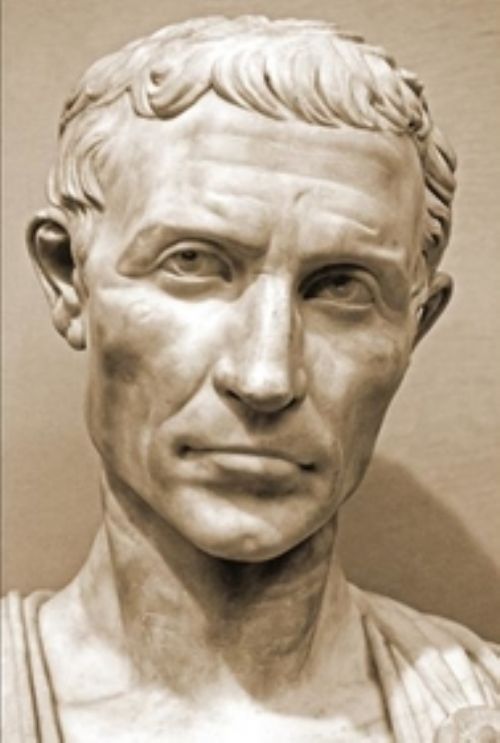
When the most righteous Man Who ever walked the earth stood before representatives of the world's two most powerful kingdoms – the Gentiles' Roman government, and the supreme religious authorities of Judaism – accused of crimes worthy of capital punishment, His defense appeared rather lackluster.

Jesus' Last Laugh

Why do the heathen rage, and the people imagine a vain thing? The kings of the earth set themselves, and the rulers take counsel together, against the LORD, and against His anointed, saying, Let us break their bands asunder, and cast away their cords from us. (Psalm 2:1-3)


When the most righteous Man Who ever walked the earth stood before representatives of the world's two most powerful kingdoms – the Gentiles' Roman government, and the supreme religious authorities of Judaism – accused of crimes worthy of capital punishment, His defense appeared rather lackluster. True, He miraculously cured one of the arresting officers, who might have testified on His behalf. His disciples were eyewitnesses of all He taught and the good He did. Would they stand in the gap? Would Lazarus mount a rousing defense?  Formerly blind Bartimaeus? Bold Peter? But scripture records none who came to His aid.


To even a novice, the questions and accusations were decidedly bent in one direction:  peg anything on Jesus to warrant the death penalty.  The burden of proof was high, and the high priest and Sanhedrin council had a hard time of it.  They had to find a religious reason worthy of death as well as a secular criminal offense, for the Jews could not execute a man under Roman rule. Their two false witnesses messed up horribly.  Even their testimony didn't agree. After being put under oath by the high priest (I adjure thee by the living God, that thou tell us whether thou be the Christ?), He simply confessed His deity with a short answer. Jesus, knowing He had to be on a cross then in a tomb within a short time, gave them what they wanted.  He voluntarily added, hereafter shall ye see the Son of man sitting on the right hand of power, and coming in the clouds of heaven. Sitting on the right hand of authority?  Perfect!  It's both blasphemous (if He were only mortal) and treasonous (if He had Rome's lowly throne in mind).  Let the monkey trials begin!


Then He's sent off to Pilate, who learning of Jesus' Galilean descent, dumped Jesus off on Herod, who happened to be in town for the Jew's holy day.  Jesus answered Herod nothing in the face of numerous outrageous accusations.  Back to Pilate, whose wife (an unelected "official"), advises him to have nothing to do with that just man, for I have suffered many things this day in a dream because of him. Pilate declares Him innocent, find[ing] no fault in him, yet condemns Jesus to death when the rioters outside demand a fellow insurrectionist.  Is this justice?  We've heard little from the accused. Why isn't He talking?


God Almighty had already answered these evil schemers through David's prophecy:  He that sitteth in the heavens shall laugh: the Lord shall have them in derision. God does not have a sense of humor. Irony, yes, when He heaps man's ways back upon his own head.  This laugh is one of scorn and disdain.  This laugh comes from an assured Ruler.


Travesty of justice is nothing new among the governed. It seems such will never end. Likewise, God's just and eternal proclamations know no end.  Yet have I set my king upon my holy hill of Zion. I will declare the decree: the LORD hath said unto me, Thou art my Son; this day have I begotten thee. Ask of me, and I shall give thee the heathen for thine inheritance, and the uttermost parts of the earth for thy possession. Thou shalt break them with a rod of iron; thou shalt dash them in pieces like a potter's vessel. (Psalm 2:6-9)


God controls the timing of any nation's start and doom.  Abram got a hint of this when God disclosed 400 years of future affliction upon his seed before their enslaving nation would be judged. God's curious note, that in the fourth generation they shall come hither again: for the iniquity of the Amorites is not yet full, seems as if God has a bucket list of national iniquities, and when it's full, it's over. His laughter begins.


King Jesus, God's Son set upon Zion's hill in heaven above, remains firmly in control, relinquishing nothing to any for any cause. Men's devil-driven thirst for absolute power and control, to be like the most High, propel the power-hungry upon earthly thrones by any means. God's executive orders remain in force:  Be wise now therefore, O ye kings: be instructed, ye judges of the earth. Serve the LORD with fear, and rejoice with trembling. Kiss the Son, lest he be angry, and ye perish from the way, when His wrath is kindled but a little. Blessed are all they that put their trust in Him. We best listen to that last statement!


Be of good cheer; I have overcome the world.


Like this?  Consider sharing it to Facebook by clicking the linked icon below.

There were times when God's hand was heavy upon Israel, as noted in the Chronicles of the Kings of Judah.

God's Solution For A Troubled Land

If I shut up heaven that there be no rain, or if I command the locusts to devour the land, or if I send pestilence among my people; (2Chr. 7:13)

There were times when God's hand was heavy upon Israel, as noted in the Chronicles of the Kings of Judah. Though not Israel, we see elements of these physically in our land; and spiritually, they are apparently here, too. Rain often typifies the Word of God preached faithfully: For as the rain cometh down, and the snow from heaven, and returneth not thither, but watereth the earth, and maketh it bring forth and bud, that it may give seed to the sower, and bread to the eater: So shall my word be that goeth forth out of my mouth ... (Isa 55:10-11a). Devouring locusts remind us of the pictures of false prophets (Rev. 9:3-11, esp. v.4, 11), and pestilence clearly presents a temporal judgment of God upon sin (2Sam 24:10,13-16). Putting all this together, what would such a land look like?

Well, you might find little to no faithful gospel preaching, family devotions, witnessing or evangelism. There would be, however, plenty of false religions (Mormons, JW, grace+works, Muslims), creation-worshippers (tree-huggers, "save the spotted owl"), or humanist worship of politics (e.g., this man will save the nation of our ills). You'd find a lot of judgment upon sin: people given up to sodomy (Rom 1:24), increase of sexually transmitted diseases upon fornicators and adulterers, mothers who abort with increased risk of breast cancer, self-serving rulers in various government positions, and kids killing kids at school. You may even find greater incidences of natural disasters – out of control wildfires, literal plagues of invasive insects, viruses, and so forth.

I find two wrong solutions will be attempted to resolve these matters. (1) The religious man whose solution does not rely upon God's Word. This individual will seek to make men feel good in or out of church by not saying anything offensive. (S)he'll seek growth by entertainment or hold kid programs at popular amusement parks. They'll build gymnasiums and heated pools. The goal is to numb the mind and excite the flesh, even if that means a scantily clad music director or a rock band borrowed from the local bar. Men will and do stoop to these means.

(2) Then there is unsaved man's solution to God's judgment on sin. He'll increase taxes to teach children about safe methods of fornication. He'll dump more money into scientific or medical research looking for a new vaccine or other technical solution. He'll increase security measures at airports, civic buildings, schools and grocery stores, while restricting and outlawing the ability to defend yourself. He truly believes that hand can join hand to resolve this by any means – as long as we keep God out of it. This, too, will fail.

Then there's God's solution: If my people, which are called by my name, shall humble themselves, and pray, and seek my face, and turn from their wicked ways; then will I hear from heaven, and will forgive their sin, and will heal their land. It begins with my people, called by My name. Those named "Christians" should humble themselves. Are we too proud? Who maketh thee to differ from another? (1Cor 4:7; cp Php 2:3-4). A proud man won't share the gospel. With humility comes a heart softened by the Word of God.

He exhorts His saints to pray. Not a 5-minute repetition, or our old standby prayer; but one as if you were about to appear before a powerful King. You would meditate ahead and prepare – actually give thought before you spoke. Pray with your head and your heart. You'd be honest and open. Pray with seriousness; give this some dedicated time. Don't use any articles of vanity (candles, special incense).

Third, we must seek His face. We're not looking for a vision, or Mary's tears in a statue or some special cloud formation. Jesus said Lo, I come in the volume of the book. We seek Him in His word, awaiting His illumination. And what shall we find? The face of God offers grace and peace, per Num. 6:25-26. Last, we must turn from our wicked ways. This means repent. We know if we've actually done the first 3 correctly, if obeying the 4th is relatively easy. A humble Christian, praying for faith and repentance will be granted his desire.

God indicates that He will hear us. How rare! He doesn't hear every man (Ps. 66:18). He will forgive (1Jn 1:8-9) and ... surprise! He will heal their land, blessing you with more gospel laborers, fewer false prophets, and a righteous rule growing stronger – maybe nationwide!


Like this?  Consider sharing it to Facebook by clicking the linked icon below.

It was a prosperous time, yet a treacherous one. The country had negotiated with a southern neighbor for improved relations. National zeal and confidence ran high. Wealth was increased for some, yet others felt the sting of present natural plague. The threat of war by two large and populous foreign lands, whose speech and script were entirely different, was dismissed as practically impossible. Only those faithful to God were bleating out her underlying problems ...

A Nation In Distress

The prophets prophesy falsely, and the priests bear rule by their means; and my people love to have it so: and what will ye do in the end thereof? (Jeremiah 5:31)

It was a prosperous time, yet a treacherous one. The country had negotiated with a southern neighbor for improved relations. National zeal and confidence ran high. Wealth was increased for some, yet others felt the sting of a present natural plague. The threat of war by two large and populous foreign lands, whose speech and script were entirely different, was dismissed as practically impossible. Only those faithful to God were bleating out her underlying problems: the worship of everything but Jehovah was the root cause of the economic downturn; wicked men grew fat off the backs of the laboring poor; judges failed to hear flagrant cases of abuse; no one went to prison for their evil deeds; those who spoke truth to power would risk a prison sentence; and rulers lived by two sets of laws – one for themselves and another in writing. It seemed like they were in a different land than what their forefathers set up. Ironically, most people seemed to like it this way. Sound familiar?

The nation was Judah, and the time was ~612 BC. A deal with Egypt whose goods Judah imported made her rulers feel confident against the growing Assyrian and Babylonian threats. The lack of rain impacted the harvest of the poor, while the wealthy could weather out such inconveniences. Lawless lifestyles, expected among the heathen and their rulers, was found grievously excessive among Judah's religious leaders, undermining the nation's raison d'etre, their very reason for existence.

Only Jeremiah, a young priest, held forth the penetrating light of God's word: Declare this in the house of Jacob, and publish it in Judah, saying, Hear now this, O foolish people, and without understanding; which have eyes, and see not; which have ears, and hear not: Fear ye not me? saith the LORD: will ye not tremble at my presence °? But this people hath a revolting and a rebellious heart; they are revolted and gone. Neither say they in their heart, Let us now fear the LORD our God, that giveth rain, both the former and the latter, in his season: he reserveth unto us the appointed weeks of the harvest. Your iniquities have turned away these things, and your sins have withholden good things from you. For among my people are found wicked men: they lay wait, as he that setteth snares; they set a trap, they catch men. As a cage is full of birds, so are their houses full of deceit: therefore they are become great, and waxen rich. They are waxen fat, they shine: yea, they overpass the deeds of the wicked: they judge not the cause, the cause of the fatherless, yet they prosper; and the right of the needy do they not judge. Shall I not visit for these things? saith the LORD: shall not my soul be avenged on such a nation as this? (Jeremiah 5:20-29)

As Pastor David Lewis profoundly said in a memorable sermon, "God is no novice in governing the universe." God is good, patient, and slow to anger; yet without contradiction, He is the just, holy and sovereign Lord of all who ruleth in the kingdom of men, and giveth it to whomsoever He will, and setteth up over it the basest of men, and that by no means will clear the guilty. In the estimation of Babylon's king one generation later, all the inhabitants of the earth are reputed as nothing. He alone is the King of heaven, all whose works are truth, and His ways judgment: and those that walk in pride he is able to abase.

As Jeremiah prophesied of Babylon's powerful sweeping deluge and a difficult-to-swallow course of action – just submit to Babylon and it will be well—it quickly became evident the king of Judah wasn't warm to any such advice. The faithful remnant in Judah surely pondered the worst. Will this doom overtake us? Will our worst fears be realized? What of our crops, our houses, our families and our land? So long as their eyes fixated upon the immediate circumstances, restlessness prevailed, and prosperity seemed dim. Sound familiar?

Yet our God, the same God Who prevailed in nearly identical circumstances millennia ago, gave all His elect the same Word of comfort: For I know the thoughts that I think toward you, saith the LORD, thoughts of peace, and not of evil, to give you an expected end. The response of God's people to such words is always the same: Then shall ye call upon me, and ye shall go and pray unto me, and I will hearken unto you. And ye shall seek me, and find me, when ye shall search for me with all your heart. And I will be found of you, saith the LORD. Perhaps one of God's purposes in such distress is to wean His people from too much attachment to this sin-cursed world, so heaven's glories beam brighter. In the world ye shall have tribulation: but be of good cheer; I have overcome the world.


Like this?  Consider sharing it to Facebook by clicking the linked icon below.

What more can be said of our God's perfect, wise and good providence? Has He not made an overabundant and rich provision for His people? Yet, in spite of this scripture about God's divine rule and perpetual care, I find believers have five common problems preventing us from fully trusting and rejoicing in our great and gracious God and Savior.

Five Thoughts For A New Year

And we know that all things work together for good to them that love God, to them who are the called according to his purpose (Rom 8:28).

What more can be said of our God's perfect, wise and good providence? Has He not made an overabundant and rich provision for His people? Yet, in spite of this scripture about God's divine rule and perpetual care, I find believers have five common problems preventing us from fully trusting and rejoicing in our great and gracious God and Savior.

1. We have entirely too many fears for a people to whom the Lord God has said Fear thou not; for I am with thee: be not dismayed; for I am thy God (Isa 41:10). Why can't we believe God? David did. He wrote I will both lay me down in peace, and sleep: for thou, LORD makest me dwell in safety (Ps 4:8). Yea, though I walk through the valley of the shadow of death, I will fear no evil: for thou art with me (Ps 23:4). Has not God promised to never leave you nor forsake you? So why do I fear the future?

2. We have far too much anxiety and worry about earthly, material things for a people to whom the Son of God has said consider the lilies of the field, how they grow; they toil not, neither do they spin (Mt 6:28-30). My God shall supply all your need according to His riches in glory by Christ Jesus (Php 4:19). Therefore take no thought ... after these things the Gentiles seek, but seek ye first the kingdom of God and His righteousness (Mt 6:31-34). Has not God promised to supply all my need? So why do I worry about earthly provisions?

3. We have far too many doubts concerning God's mercy, love, and grace for a people to whom the Lord Jesus Christ said all that the Father gives me shall come to me, and him that cometh to me I will in no wise cast out (Jn 6:37). On what grounds do I call into question the mercy, love and grace of God? Shall the God of heaven fail to keep His promise? He explicitly said, I give unto them eternal life; and they shall never perish, neither shall any man pluck them out of my hand (John 10:28). He that believeth on the Son hath everlasting life (John 3:36). I believe God. I have life. It is the height of arrogant presumption to call into question the promise of God. Saul of Tarsus was a sinner, just like us - and saved by grace, just like us. He didn't question God's promise. He wrote, I know whom I have believed, and am persuaded that He is able (2Tim 1:12). There is therefore now no condemnation to them which are in Christ Jesus. If God be for us, who is he that condemneth? (Rom 8:1,31,34). I shouldn't question His grace because of my sin - His grace super abounds where sin is found. I shouldn't suspect His mercy because I don't deserve mercy - His mercy is for the undeserving. I shouldn't doubt His faithfulness because of my unfaithfulness - His faithfulness stands forever. If we believe not, yet He abideth faithful: He cannot deny Himself (2Tim 2:13). So why doubt God's promises of mercy?

4. We spend entirely too much time grumbling and complaining about our trials and troubles for a people to whom the Lord Jesus has said in me ye might have peace. In the world ye shall have tribulation: but be of good cheer (Jn 16:33a). We shouldn't be surprised when trouble comes our way. We ought to be surprised when it doesn't! Beloved, think it not strange concerning the fiery trial which is to try you (1Pe 4:12). Behold, I have refined thee; I have chosen thee in the furnace of affliction (Isa 48:10). Our trials are nothing to what others have endured. Our sorrows are nothing compared to the Son of Man's, Who was a man of sorrow, acquainted with grief. We bear only a light affliction, which is but for a moment (2Cor 4:17-18). So why am I dismayed when trials come?

5. We have entirely too much attachment to this world, this present life, for a people to whom God has told the world passeth away, but he that doeth the will of God abideth forever (1Jn 2:17). We know that if our earthly house were dissolved, we have a building of God (2Cor 5:1). Believers long to be with Christ. Yet it seems so difficult for us to tear loose from this world. Has not the Lord Jesus told us to look for the coming of the day of God, when the heavens being on fire shall be dissolved, and the elements shall melt with fervent heat? So why cling to this world?

Consider how our God has answered your petitions this past year; and also reflect upon your distress and anxiety during that period of time, while it's fresh in your mind. Will you not consider it to have been needless worry? We have a God who delivered us from so great a death, and does deliver us; in whom we trust that He will still deliver us (2Cor 1:10).

(Adapted from Pas. Henry T. Mahan)

Question -- what do you find to be your challenge to overcome this year, for which God has already provided you great and exceeding precious promises?


Like this?  Consider sharing it to Facebook by clicking the linked icon below.
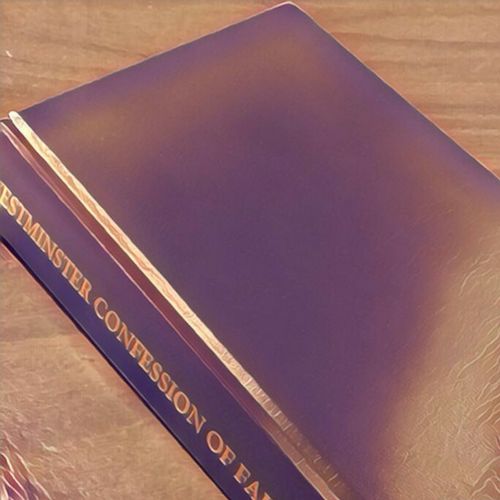
We at Mission Bible Church like to point out to you, the lay person, where the counterfeit Greek text, known as the Critical Text (CT), directly impacts doctrine.  One passage not in the CT, and thus not in many modern translations, is Matthew 6:13, the conclusion of the Lord's Prayer ...

Westminster Divines and Matt 6:13

Westminster Divines Held Matt. 6:13 as Canonical


We at Mission Bible Church like to point out to you, the lay person, where the counterfeit Greek text, known as the Critical Text (CT), directly impacts doctrine.  One passage not in the CT, and thus not in many modern translations, is Matthew 6:13, the conclusion of the Lord's Prayer, which reads:  And lead us not into temptation, but deliver us from evil: For thine is the kingdom, and the power, and the glory, for ever. Amen.


In Reformed circles, usually a minister must take an oath of adherence to some written standard (i.e., the Bible) as expressed in that church's doctrinal substandard (e.g., the Westminster Confessions, or WCF). Any exceptions the minister takes must be acknowledged in advance to the ordaining body, so that such can be examined.  Nearly all ministers I've encountered will accept the entire WCF "without exception" yet will not preach on Matt 6:13 nor teach it, since they don't believe it's in the Bible.  This is disingenuous at best, or as deceptive as a wolf.


Why?  Because the Shorter Catechism (SC) Q#107 states thus –


"Q. 107. What doth the conclusion of the Lord's Prayer teach us?

A. The conclusion of the Lord's Prayer, which is, For thine is the kingdom, and the power, and the glory, for ever, Amen. teacheth us to take our encouragement in prayer from God only [a], and in our prayers to praise him, ascribing kingdom, power, and glory to him [b]; and, in testimony of our desire, and assurance to be heard, we say, Amen. [c]"


The doctrinal point hinges on Matthew 6:13.  By removing this verse, an entire doctrinal standard is removed.  Isn't it just like the devil, to nip away at the very last confessional statement, where men will be tempted to say, "nah, it doesn't matter."  Yet God through the Apostle Paul says all scripture ... is profitable for doctrine. That includes Matthew 6:13.


Furthermore, the WCF SC original edition ends with a listing of the 10 commandments (Exodus 20), the Lord's Prayer (Matt. 6), and the Apostle's Creed.  They justify the insertion of the Creed by acknowledging it "ought not to be esteemed canonical scripture, as the Ten Commandments and the Lord's Prayer ... but because it is a brief sum of the Christian faith."  If they deemed Matthew 6:13 as canon, so ought we. Learn more about this at http://holdingfast.net/ESV-Corrupts-Doctrine/.

Is salvation by man's free will, or by God's grace alone? This simple table will explain those two views in light of Scripture.

WEEDS or TULIPs?

Salvation by man's "FREE WILL"


Will of Man Is Free

Mankind is influenced by sin, but not under its dominion, as all have free will and the ability to determine their own destiny.  Anyone can of his own free will come to Christ for salvation. All men have faith, but not all will to exercise it.


Election Is Conditional

Election to salvation involves both the sinner choosing God and God choosing the sinner. God's choice was conditioned upon man's choice, as God chose in eternity past those whom He foresaw in time believing in Jesus Christ for salvation.


Every Man Is Redeemed

Jesus Christ died for everyone, paying the price of redemption for them all; yet this does not guarantee their forgiveness, as many of His "redeemed" will be eventually damned because of unbelief.


Denial Confounds Grace

The sovereignty of God does not extend to His salvation, as man's will can here thwart God's purpose.  God is trying to save every sinner, but He is helpless to save any sinner who will not let Him.


Some Will Lose Salvation

God cannot preserve in salvation those who of their own free will refuse to be preserved.  Those believers who do not remain faithful to the very end will lose their salvation, "fall from grace," and eventually perish.

Salvation by God's GRACE ALONE


Total Depravity

Mankind is spiritually dead and under the dominion of sin (Ephesians 2:1-3; John 8:34).  None can of his own will come to Christ for salvation (John 5:40; 6:65). None has faith unless God graciously bestows it (Eph. 2:8).


Unconditional Election

God the Father has graciously chosen and predestined to salvation some of our fallen (2 Thessalonians 2:13; Ephesians 1:3-6). His choice was in no way conditioned upon foreseen good or merit in the chosen ones (John 15:16).


Limited Atonement

Jesus Christ died as the substitute of God's elect, forever redeeming and forgiving them (Isaiah 53:4-6,8b; Ephesians 1:7). He did not redeem any who die in unbelief (John 10:11,26).


Irresistible Grace

God will not be thwarted in His purpose of salvation (Daniel 4:35). Every one of His chosen and redeemed sinners shall willingly be brought to saving faith in Jesus Christ (John 6:37,45; Romans 8:29f; Psalm 110:3).


Perseverance of the Saints

God preserves in salvation all believers in Christ, and none will ever perish (John 3:16; 10:28f).  He enables them to persevere to the end, so none will be lost (Jeremiah 32:40; Romans 8:35-39).


By Pas. Daniel Parks, Redeemer Baptist Church, Louisville, KY